
 Heating Solutions
 Solar Energy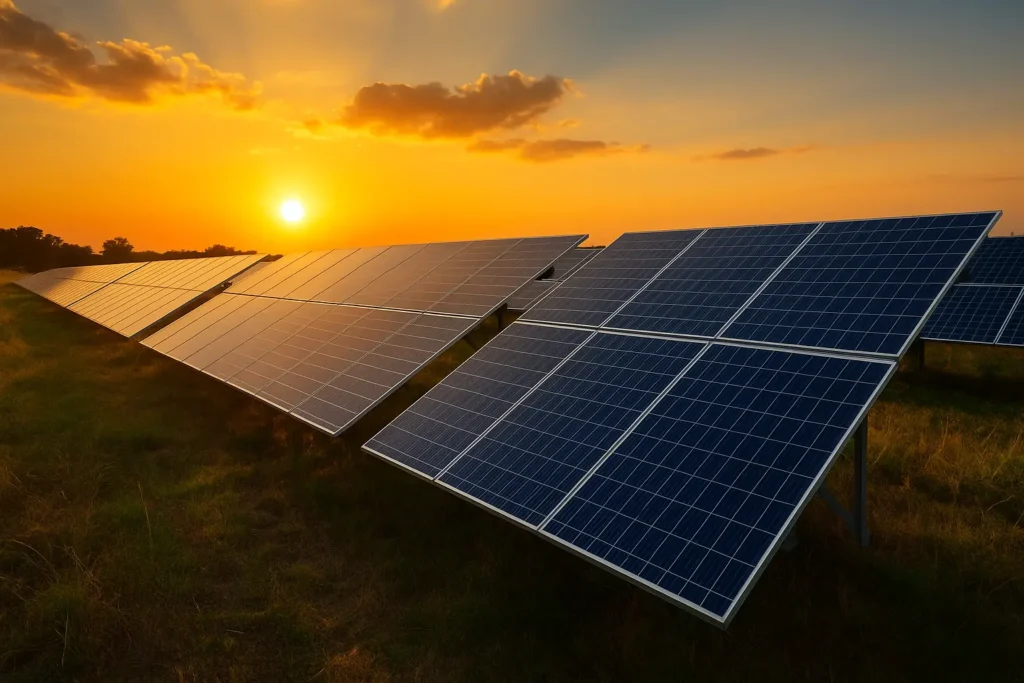
By the time you finish reading this article, the sun will have sent enough energy to Earth to meet global electricity demand for the next several hours. That’s not a metaphor — it’s physics. And it’s the reason solar energy has gone from a curiosity to one of the most important technologies of our time.
Let’s Start With the Basics: What Is Solar Energy?
Solar energy is, at its simplest, energy that comes from the sun. The sun continuously releases enormous amounts of radiation — light and heat — into space in all directions. A tiny fraction of that radiation strikes our planet, and it is more than enough to power every light bulb, electric vehicle, factory, and air conditioner on Earth, with enormous amounts left over.
When we talk about “solar energy” today, we usually mean one of two things: using sunlight to generate electricity (through solar panels), or using the sun’s heat directly for warmth, water heating, or industrial processes. Both are genuinely ancient ideas — humans have used the sun’s warmth for heating and drying food for millennia — but the modern science of converting sunlight into electricity is a product of the last 170 years.
The formal definition, as used by scientists and engineers, is this: solar energy is radiant light and heat from the sun that is harnessed using technologies such as photovoltaic panels, solar thermal collectors, and concentrating solar power systems to generate electricity or useful heat.

That definition is accurate, but it doesn’t capture what makes solar so remarkable — which is the sheer, almost incomprehensible scale of the resource. Every 90 minutes, enough sunlight reaches Earth’s surface to meet global energy demand for an entire year. Most of it bounces back into space unused. The challenge — and the great opportunity — of our age is figuring out how to catch more of it.
Where Does Solar Energy Actually Come From?
To understand solar energy properly, you need to go back about 93 million miles, to the core of the sun.
The sun is a massive ball of mostly hydrogen and helium gas, held together by gravity, with a core temperature of around 15 million degrees Celsius. Under those extreme conditions, hydrogen atoms fuse together to form helium — a process called nuclear fusion — and in doing so, they release extraordinary amounts of energy. That energy travels outward through the sun over thousands of years, eventually reaching the sun’s surface, and then radiates outward into space in all directions as electromagnetic radiation: gamma rays, X-rays, ultraviolet light, visible light, infrared light, and radio waves.
By the time this radiation crosses the vacuum of space and reaches Earth, it has a power density of about 1,361 watts per square metre — what scientists call the “solar constant.” Our atmosphere absorbs and scatters some of this, so at Earth’s surface, the intensity is somewhat lower, typically around 1,000 watts per square metre on a clear day with the sun directly overhead.
Here’s a number worth sitting with: the sun produces about 3.8 × 10²⁶ watts of power every second. Earth intercepts only about one two-billionth of that. And yet that one two-billionth is, by a large margin, the most abundant energy source available to us.
The sun’s energy reaches us primarily as light — about 43% of it is visible light, 49% is infrared (heat), and the remaining 8% is ultraviolet. Solar panels are designed to capture the visible and near-infrared portions of this spectrum. When sunlight hits a solar panel, it’s not just warmth landing on glass. At the atomic level, it’s packets of energy — called photons — striking the surface and triggering a fascinating chain of events.
The Science of How Solar Panels Work: The Photovoltaic Effect
Here’s the part that still feels a little like magic, even once you understand it: a solar panel has no moving parts, no combustion, no noise — and yet sunlight goes in and electricity comes out. That happens because of something called the photovoltaic effect, a phenomenon first discovered in 1839 that took another century to become practically useful.
The short version is this: when photons from sunlight strike a silicon solar cell, they knock electrons loose and set them moving in a consistent direction. That directional flow of electrons is, by definition, an electrical current — and that current is your solar electricity.
If you want the full picture — the silicon doping, the p-n junction, the step-by-step journey from rooftop to power outlet — we’ve covered it in exhaustive detail in How Do Solar Panels Work? The Complete Guide to Solar Panels & Photovoltaic Technology. It’s worth a read if you’re curious about what’s actually happening inside those panels.
For the complete step-by-step journey — from how photons create current, to how your inverter converts it, to what actually happens during a grid outage — see our guide to how solar energy works.
What Is Renewable Energy — And Why Does Solar Qualify?
The term “renewable energy” gets used frequently, but it’s worth being precise about what it actually means. Renewable energy is energy derived from sources that are replenished naturally on a human timescale — sources that don’t run out as we use them, or that regenerate far faster than we consume them.
This is the crucial distinction from fossil fuels. Coal, oil, and natural gas were formed from organic material over hundreds of millions of years. When we burn them, we’re releasing energy that was stored long before humans existed — and we’re doing it in centuries rather than geological epochs. Once a coal seam is exhausted, it’s gone. That’s not the case with the sun.
The sun has been burning for approximately 4.6 billion years, and it’s expected to continue for another 5 billion or so. On any practical human timescale, sunlight is inexhaustible. Every day, without any input from us and without depletion, the sun will rise and irradiate Earth’s surface. You cannot use it up, overfish it, or frack it dry.
This is what makes solar energy renewable in the most meaningful sense of the word. It’s not just that it replenishes — it’s that it replenishes on a daily cycle, reliably, without human intervention, and with an energy budget so vast it dwarfs our entire global energy consumption.
Other renewable sources — wind, hydropower, geothermal, tidal — are also important. But solar is unique in its scale, its geographic accessibility (nearly every part of Earth receives meaningful sunlight), and its flexibility (it can power a remote village in sub-Saharan Africa through small panels or a city through a utility-scale farm in the desert).
While it is easy to say that the sun is an endless resource, evaluating true environmental impact requires looking at the big picture—including the mining of raw materials, factory carbon footprints, and eventual panel recycling. If you want to dive deeper into the full lifecycle, energy payback periods, and whether the technology stands up to scrutiny over the long haul, see our complete guide exploring exactly is solar energy renewable and truly sustainable?
Why Is Solar Energy Sustainable?
Renewable and sustainable are related concepts, but they’re not identical. Something can be renewable but still cause significant harm — burning wood indefinitely, for instance, can contribute to deforestation and air pollution even though trees grow back. Sustainability asks a more complete question: does this energy source, used over the long term, allow human society to thrive without permanently degrading the environment or depleting resources?
Solar energy has a compelling sustainability case. Let’s walk through it honestly.
Operational Emissions: Near Zero
When a solar panel generates electricity, it produces no exhaust, no smoke, no carbon dioxide, no methane. There are no combustion products. The only inputs are sunlight, and the output is clean electricity. During operation, solar is essentially emissions-free.
Lifecycle Emissions: Dramatically Lower Than Alternatives
The nuanced version of this question asks about the full lifecycle of a solar panel, from mining the raw materials (silicon, aluminium, glass, small amounts of silver and other metals) through manufacturing, shipping, installation, operation, and eventual disposal or recycling.
Lifecycle analyses consistently show that solar panels emit a median of around 40–46 grams of CO₂ equivalent per kilowatt-hour of electricity generated over their operational life. Coal generates around 820 grams per kilowatt-hour. Natural gas generates around 490 grams. To put that simply: coal emits roughly 20 times more carbon per unit of electricity than solar does over its full lifecycle, and natural gas emits roughly 11 times more.
Critically, around 80% of a solar panel’s lifetime emissions occur during manufacturing — not operation. And those manufacturing emissions are typically “paid back” within the first one to three years of the panel’s operation, after which the panel generates clean energy for another 25–30 years. Modern solar panels have a functional lifecycle of 30–35 years, which means the vast majority of their operational life involves zero direct emissions.
Energy Payback Time
One of the most common misconceptions about solar panels is that they consume more energy to manufacture than they ever produce. That’s not true — but if you want the full breakdown of payback periods, degradation rates, and what actually happens to panels at end of life, we’ve put it all together in our complete guide to how solar panels work.
Land Use
Solar does require land, which is a genuine sustainability consideration. Utility-scale solar farms require significant surface area. However, rooftop and building-integrated solar — which covers no additional land — represents a growing portion of capacity, and many large solar farms are being designed to coexist with agriculture (a concept called “agrivoltaics”), allowing sheep to graze or crops to grow beneath the panels.
Panel Recycling: The Honest Challenge
Panel recycling is a genuine challenge the industry is still working through — and it deserves an honest conversation rather than a footnote. We cover it properly in our solar panels guide.
Basic Concepts in Solar Energy: What You Need to Know
Beyond panels and photovoltaics, solar energy encompasses a broader set of technologies and concepts worth understanding.
Not all solar energy systems work the same way. The panels you see on rooftops use photovoltaic (PV) technology — converting sunlight directly into electricity at the cell level. Then there’s concentrated solar power (CSP), which uses mirrors to focus sunlight into heat, driving a turbine. And solar thermal, which skips electricity generation entirely and uses the sun’s heat directly — most commonly for hot water systems.
Within PV alone, there are meaningful differences between panel types — monocrystalline, polycrystalline, and thin-film — each with different efficiency ratings, costs, and ideal use cases. If you’re trying to understand which type makes sense for a real installation, we’ve broken down all three in detail, including a full comparison, in our complete guide to how solar panels work.
Solar Irradiance and Peak Sun Hours
Not all locations receive the same amount of sunlight. “Peak sun hours” is a measure of how many hours per day a location receives solar irradiance equivalent to 1,000 watts per square metre. The Australian outback might receive 6–7 peak sun hours per day; northern Europe might receive 2–3. This doesn’t mean solar doesn’t work in less sunny places — Germany, not exactly a tropical paradise, has one of the world’s most successful solar industries — but it does affect how much a given panel produces.
Grid-Connected vs. Off-Grid Systems
Most rooftop solar installations stay connected to the public electricity grid — surplus power flows out, and you draw from the grid when your panels aren’t producing enough. Off-grid systems pair solar with battery storage to operate independently, though they come with meaningful additional cost and complexity. The majority of homeowners opt for grid-connected systems, sometimes with a battery added for backup during outages.
Inverters and the DC/AC Conversion
Solar panels produce direct current (DC) electricity. Most home appliances and the electrical grid run on alternating current (AC). Inverters perform this conversion, and modern inverters have efficiencies of 97–99%. String inverters handle an entire array; microinverters handle individual panels, which can be advantageous when some panels are partially shaded.
The Staggering Growth of Solar: Where We Are Today
The growth of solar energy over the past two decades is, without exaggeration, one of the most dramatic technology adoption stories in history. The numbers are worth sitting with.
In 2000, global solar PV capacity was about 1.3 gigawatts. By the end of 2024, it had surpassed 1,400 gigawatts — an increase of more than 1,000-fold in a quarter century. Solar alone accounted for roughly 67% of all new renewable energy capacity added in 2023. Global solar installations in 2024 were projected to be about 29% higher than 2023 — which itself was a record-breaking year.
In the United States, solar accounted for approximately 7% of electricity generation in 2024, up from around 3.5% in 2020. Solar generated 27% more electricity in 2024 than in 2023. For the first time, in 2024, solar and wind combined generated more electricity in the US than coal — a symbolic and substantive milestone for the clean energy transition.
The cost story is equally striking. Since the 1970s, the cost of solar panels has dropped by approximately 99%, from around $100 per watt to under $0.20 per watt today. Since 2010 alone, utility-scale solar PV costs have fallen by 90%, making solar the cheapest source of new electricity generation in most parts of the world. This isn’t a subsidy story or a political story — it’s a technology story, driven by manufacturing scale, materials improvements, and relentless engineering innovation.
If you’re wondering what that cost drop means in practice for a homeowner today, our guide to how much solar energy costs in 2026 breaks down real installation prices, ROI timelines, and what most companies don’t tell you upfront.
What People Are Actually Asking About Solar
Most introductory articles about solar energy tell you what it is and how it works. Fewer address the questions that genuinely curious people are asking — questions that reveal both the promise and the complexity of this technology.
The equity question:
Access to solar energy is not evenly distributed. Wealthier homeowners in wealthy countries have benefited most from rooftop solar. Community solar programs — where multiple households share the output of a larger solar installation — are one of the most important innovations for expanding access, and they grew by an estimated 10% in the US in 2024. But the industry has more work to do to ensure the energy transition benefits everyone, not just those who own their homes or can afford upfront installation costs.
“Maria, a renter in Chicago, couldn’t put panels on her apartment roof — but joining a community solar subscription cut her bill by $40/month without any installation.”
The materials question:
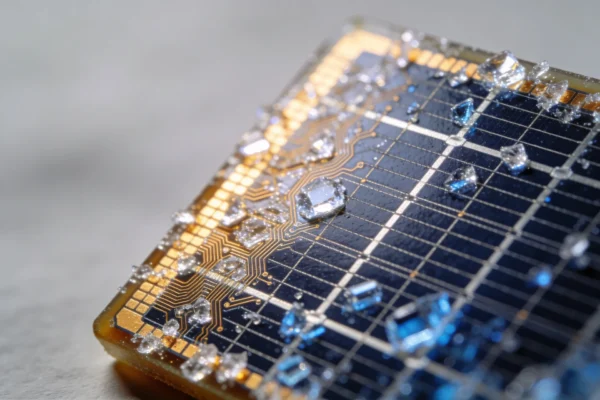
Silicon is abundant, but solar panels also use silver (for electrical contacts), tellurium, indium, and in some panels, cadmium. Some of these materials are scarce or have problematic supply chains. Research into alternatives — including perovskite cells, which use far more common materials — is one of the most active frontiers in solar science.
“James, a solar installer in Arizona, gets asked constantly: ‘Are there blood minerals in my panels?’ It’s a fair question he wishes the industry answered more directly.”
The jobs question:
The solar industry employed nearly 300,000 workers in the US alone in 2024. Globally, it supports millions more. But as solar manufacturing has concentrated heavily in Asia — with 72% of all new global PV capacity in 2024 coming from Asian countries — questions about supply chain resilience, domestic manufacturing, and labour practices deserve serious attention.
“When the local coal plant closed, Derek was skeptical about retraining for solar. Three years later, he’s a panel installer earning more than he did before.”
The grid question:
Solar’s intermittency (it doesn’t generate at night, and generates less on cloudy days) is the most-cited objection to solar as a primary energy source. Battery storage is the primary answer, and battery deployment has grown 23-fold in the US since 2020. But the grid also needs to evolve in terms of transmission infrastructure, demand management, and market design. Solar is a technology problem largely solved; the harder challenge now is a systems and policy problem.
“During last summer’s heatwave, Lisa’s battery-backed solar kept her house running for 11 hours during a grid outage while neighbors lost power.”
The future question:
Research into tandem solar cells — which stack multiple layers to capture different parts of the solar spectrum — is pushing theoretical efficiency limits significantly higher. Perovskite solar cells have shown efficiencies of up to 33.9% in laboratory settings. Floating solar on reservoirs, solar roads, building-integrated photovoltaics, and space-based solar power are all being seriously explored. The next decade of solar innovation may be as dramatic as the last.
Why This Matters Right Now
Here’s the honest version of why solar energy isn’t just interesting — it’s urgent.
The global energy system is in the middle of the largest transformation in its history. We are shifting, not smoothly or without conflict, from a system built on burning ancient hydrocarbons to one increasingly powered by flows of energy from the sun and wind. This transition matters because the burning of fossil fuels is warming the planet in ways that will be disruptive and, in some cases, catastrophic if unaddressed.
Solar energy isn’t a complete solution on its own. It needs storage, grid upgrades, complementary sources like wind and hydro, and sensible policy to deliver on its potential. But it is, right now, the fastest-growing, most cost-competitive, and increasingly most abundant source of new electricity generation on Earth. Every hour, as you go about your day, roughly 1.5 hours’ worth of global energy demand is arriving at Earth’s surface from the sun — free, clean, and waiting.
The question is no longer whether solar energy is viable. That argument is over. The questions now are about speed, equity, grid integration, and the thousand engineering and policy details that determine how quickly and fairly this transition unfolds.
Before deciding if solar is right for you, it’s worth weighing the full picture — see our breakdown of the advantages and disadvantages of solar energy for an honest, data-driven look at both sides.
Key Takeaways
- Solar energy is radiant light and heat from the sun, converted into electricity or useful heat through photovoltaic panels, solar thermal systems, or concentrated solar power.
- The sun produces energy through nuclear fusion in its core and has enough fuel to continue for billions of years — making solar energy renewable on any human timescale.
- The photovoltaic effect — discovered in 1839 and turned into practical technology in 1954 — is the process by which photons from sunlight knock electrons loose in silicon, creating electrical current.
- Solar is sustainable because its lifecycle carbon emissions are roughly 20 times lower than coal and 11 times lower than natural gas, and panels typically offset their manufacturing emissions within one to three years.
- Global installed solar capacity exceeded 1,400 GW in 2024, having grown from 1.3 GW in 2000. Solar costs have fallen 99% since the 1970s, making it the cheapest new electricity source in most of the world.
- Significant challenges remain — panel recycling, grid integration, material supply chains, and equitable access — but none of these are reasons to doubt solar’s role in the energy future. They are simply the next set of problems to solve.
Frequently Asked Questions
Yes, they do—but with reduced output. Solar panels do not need direct, blazing sunlight to generate electricity; they just need daylight. On a cloudy day, panels might produce 10% to 25% of their typical output. As for winter, the cold temperature actually helps! Solar electronics function more efficiently in cooler weather. The only downside to winter is fewer daylight hours, but the system still generates power.
This is a very common concern. You generally have two options:
-
Sell the home with the system: This is usually the best financial move. Studies show that homes with solar panels sell faster and for a premium price because the new owners will enjoy the low utility bills immediately.
-
Move the system: While possible, uninstalling and reinstalling a system is labor-intensive and expensive, and it may void your warranty. It is rarely recommended.
Note: If you lease your panels rather than own them, you will need to transfer the lease agreement to the new home buyer.
Solar panels are incredibly durable. The industry standard for a warranty is 25 to 30 years. However, this doesn’t mean they stop working after 30 years. It simply means their efficiency drops slightly. Solar panels degrade at a rate of about 0.5% per year. This means that after 25 years, your panels will likely still be producing about 87-90% of the electricity they did on day one.
In most climates, no. Solar panels are generally self-cleaning; standard rainfall is usually sufficient to wash away dust and dirt. However, if you live in an exceptionally dry area or near heavy agriculture (lots of dust) or the coast (salt spray), a professional cleaning once a year can help maintain maximum efficiency.
Important: Never use harsh chemicals or abrasive sponges on your panels, as scratching the glass will permanently lower their output.
When installed correctly by a certified professional, no. In fact, solar panels can actually extend the life of the portion of the roof they cover by protecting shingles from UV rays and weather damage. The racking systems used today are designed to be watertight, using flashing and sealants to prevent any leaks where the equipment attaches to the roof rafters.
Yes, but it is expensive. To go truly off-grid (disconnecting from the utility entirely), you need a very large solar array and a massive battery bank to sustain you through weeks of bad weather or winter darkness. For 99% of homeowners, a grid-tied system (where you are still connected to the utility for backup) is the most cost-effective and reliable solution.
Yes — and it’s a topic worth understanding properly before you invest. The short answer is that up to 90% of a panel’s materials can be recovered, but the recycling infrastructure to do that at scale is still catching up with the volume of panels now reaching end of life. We break down what that means for homeowners in our solar panels guide.
Sources: EcoWatch Solar Statistics (2024); U.S. Department of Energy Quarterly Solar Industry Update (2024); Union of Concerned Scientists Clean Energy Review (2024); U.S. Energy Information Administration Short-Term Energy Outlook; National Renewable Energy Laboratory (NREL) Life Cycle Assessment; International Renewable Energy Agency (IRENA) Renewable Capacity Statistics 2024; International Energy Agency (IEA) Renewables 2024; Advanced Power Alliance Lifecycle Emissions Analysis; Britannica Photovoltaic Effect; EnergySage Solar PV Guide; Skeptical Science Lifecycle Emissions Comparison; GreenMatch UK Solar Statistics 2025/26; Carbon Brief Nature Energy Study.