
 Heating Solutions
 Solar Energy
If you’ve spent any time looking into ways to lower your monthly electric bills or do right by the planet, you have undoubtedly run into the term “renewable energy.” Solar power is almost always the poster child for this movement.
But if you are a critical thinker, you might find yourself asking a deeper question: Is solar energy renewable in the truest sense of the word, or is that just an effective marketing catchphrase?
It’s easy to accept the surface-level answer that solar is green because the sun shines every day. However, when you start looking into what it actually takes to build, install, and eventually dispose of a solar power system, the conversation becomes much more nuanced.
To truly understand why is solar renewable and how is solar energy sustainable, we have to look past the sunshine and examine the entire lifecycle of the technology. Let’s break down the science, the environmental realities, and the practical facts behind solar energy’s status as a pillar of the clean energy transition.
What Does “Renewable Energy” Actually Mean?
Before determining where solar power fits, it helps to establish a clear definition of what makes an energy source renewable in the first place.
At its core, renewable energy comes from natural resources that replenish themselves at a rate that is equal to or faster than the rate at which they are consumed. These resources are practically inexhaustible on any timescale that matters to human civilization.
To better understand this, it is helpful to look at a direct renewable vs non-renewable energy comparison:
-
Non-Renewable Energy: Fossil fuels like coal, oil, and natural gas are finite. They were formed over hundreds of millions of years from the compressed remains of ancient plants and organisms. Once we extract and burn a ton of coal or a barrel of oil, that specific resource is gone forever. We are consuming these fuels millions of times faster than nature can recreate them.
-
Renewable Energy: Forces of nature like the wind, the tides, geothermal heat, and sunlight are constantly active. Using the wind to turn a turbine or using sunlight to generate electricity does not “deplete” the wind or the sun for future generations.
Is Solar Energy Renewable?
The direct, unambiguous answer is yes: solar energy is entirely renewable.
Solar power qualifies as a renewable solar energy source because its primary fuel—solar radiation—is an inherently infinite resource on a human timescale.
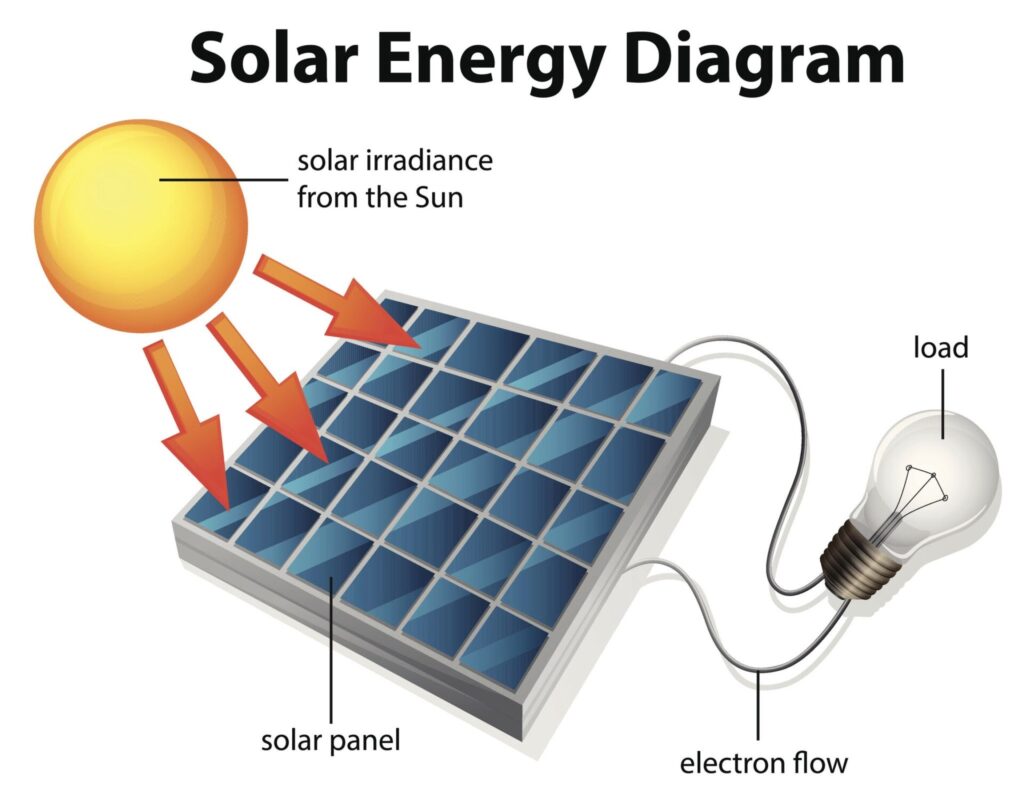
When we harness energy from the sun, we are capturing photons (light particles) that have traveled roughly 93 million miles to Earth. The act of capturing these photons using a solar array doesn’t diminish the sun’s brightness, nor does it reduce the amount of light available to the rest of the planet.
Why Is Solar Renewable?
The classification of solar as a renewable resource comes down to a matter of cosmic scales. Astronomers estimate that our sun is roughly halfway through its life cycle and will continue to fuse hydrogen and radiate light for another 4.5 to 5 billion years.
Because the resource is functionally endless for the entirety of human history, energy experts, scientists, and global organizations universally classify solar power as renewable.
Is Solar Energy Renewable and Why? The Deeper Science
To understand is solar energy renewable and why it holds this title so securely, we have to look at the sheer volume of energy the sun delivers to our planet every single day.
According to data from the National Renewable Energy Laboratory (NREL), the amount of solar energy striking the Earth’s surface in just one hour contains more energy than the entire global population consumes in a full year.
When we convert this solar radiation into electricity, we aren’t “using up” a stock of fuel. Instead, we are intercepting a tiny fraction of an ongoing, natural energy flow. This is fundamentally different from a coal-fired power plant, which must constantly buy, transport, and burn physical tons of a finite commodity to keep its generators spinning.
Understanding how the planet absorbs this massive influx of power requires looking at what is happening 93 million miles away. The sun functions as a colossal nuclear fusion engine, constantly radiating vast amounts of electromagnetic radiation across space. To get a complete breakdown of where this energy originates, how it travels to Earth, and how it is captured, check out our comprehensive guide on what is solar energy to master the foundational science behind this technology.
Renewable vs. Sustainable: What’s the Difference?
In everyday conversations, people often use the words “renewable” and “sustainable” interchangeably. However, if you want to understand the true impact of clean energy, it is vital to recognize that they mean two different things.
The Key Distinction:
Renewable refers to the source of the energy. If the source naturally replenishes itself infinitely, it is renewable.
Sustainable refers to the entire system’s long-term viability, including its environmental, economic, and social impacts.
An energy source can be inherently renewable while still facing sustainability challenges. For example, large-scale hydroelectric dams utilize a completely renewable water cycle. However, building a massive dam can flood ecosystems, displace local communities, and disrupt river wildlife. Therefore, while hydro is renewable, a specific dam project might not be entirely sustainable.
So, where does solar power fall in this equation? Is solar energy sustainable as well as renewable?
To answer that accurately, we have to look beyond the marketing brochures and evaluate the full lifecycle of solar technology.
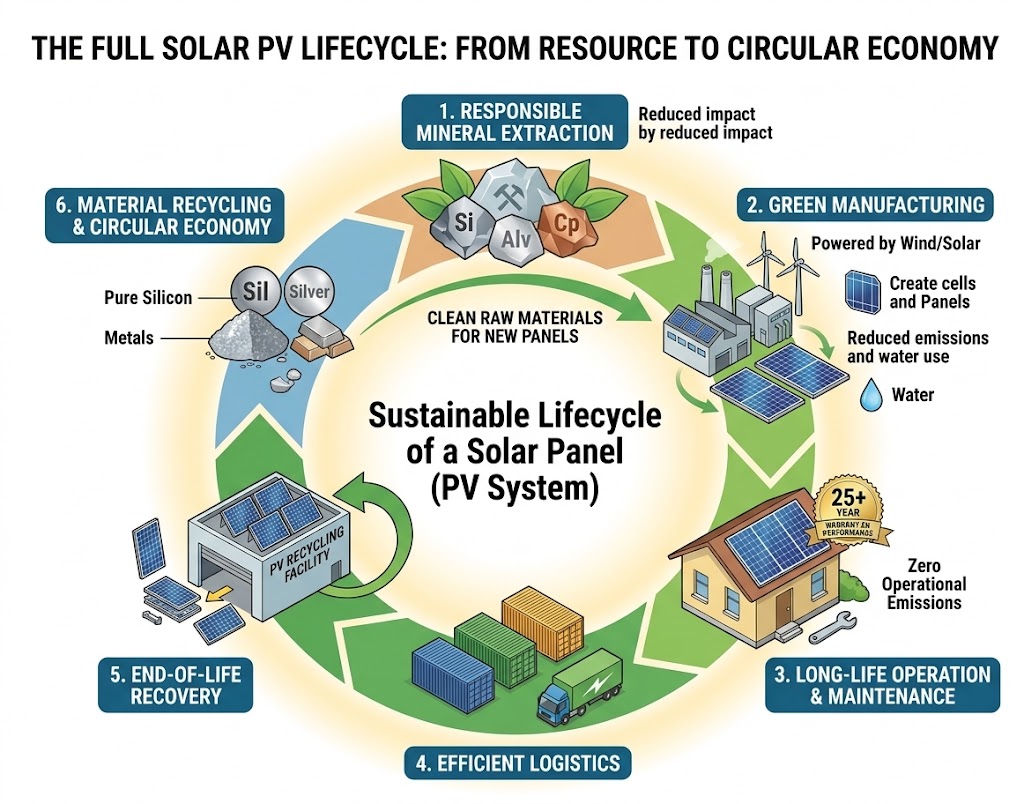
How Is Solar Energy Sustainable?
When evaluating solar energy sustainability, the technology scores incredibly high marks across its operational life. Most modern residential and commercial solar panels are warrantied to last between 25 and 30 years, and many continue to produce functional amounts of electricity long after that window closes.
Over those three decades of operation, solar power delivers profound sustainability benefits:
1. Near-Zero Operational Emissions
Once a solar panel is installed on a roof or in a solar farm, it generates electricity with zero greenhouse gas emissions, zero water pollution, and zero air pollution. According to the Intergovernmental Panel on Climate Change (IPCC), solar energy has one of the lowest lifecycle emissions profiles of any electricity generation technology, vastly outperforming coal, oil, and natural gas.
2. Drastic Reduction in Fossil Fuel Dependence
Every kilowatt-hour ($kWh$) of electricity generated by a solar panel is a kilowatt-hour that does not need to be produced by burning fossil fuels. This directly reduces the demand for destructive resource extraction processes like mountaintop removal coal mining and offshore oil drilling.
3. The Reality of Energy Payback Time (EPBT)
A common critique of solar energy is that it takes massive amounts of energy to mine raw materials, melt silicon, and manufacture the panels. This is true—the manufacturing process does have a carbon footprint.
However, researchers look at a metric known as the Energy Payback Time (EPBT). This measures how long a solar panel must operate to generate the same amount of energy that was consumed to manufacture, transport, and install it.
According to data compiled by Fraunhofer ISE and backed by NREL findings, the typical energy payback time for modern silicon solar panels is between 1 and 2 years, depending on where the panels were manufactured and how much sunlight they receive.
This rapid payback period is incredibly impressive considering the raw physics taking place on your roof. While this lifecycle sustainability is vital, the actual science of turning those captured photons into usable home electricity involves a highly synchronized process between your panels, the inverter, and your home’s breaker box. To see exactly how this power conversion happens in real-time, read our step-by-step breakdown of how solar energy works from sunlight to electricity.
Given that a panel operates for 25 to 30 years, it spends roughly 95% of its operational life producing 100% clean, net-positive energy. That is a textbook definition of sustainability.
The Environmental Footprint of Solar Energy
To maintain a balanced, honest perspective, we must acknowledge that renewable solar energy is not completely impact-free. No method of generating electricity at a global scale is perfect. To truly understand the lifecycle of solar power, we have to look at the primary environmental trade-offs involved.
Raw Material Extraction and Mining
Solar panels are highly sophisticated pieces of technology. Producing them requires a variety of raw materials, including high-purity silicon, silver, copper, aluminum, and in some specialized panels, rarer elements like tellurium or indium. Extracting these minerals requires industrial mining operations, which carry localized environmental footprints, habitat disruption, and energy demands.
Manufacturing and Supply Chains
Turning raw quartz into solar-grade silicon requires extreme heat. This melting process occurs in industrial furnaces that require vast amounts of electricity. If the factory manufacturing the solar panels is located in a region with a power grid heavily reliant on coal (as is the case in some manufacturing hubs overseas), the initial carbon footprint of those panels will be higher.
Land Use and Local Ecosystems
While residential rooftop solar systems have a virtually zero-acre land footprint, utility-scale solar farms require significant amounts of land to generate hundreds of megawatts of power. If not managed carefully, clearing large areas of land in desert or rural environments can disrupt local wildlife habitats and impact native plant species.
Real-World Example: A Homeowner’s Journey Beyond the Marketing
To put these technical concepts into perspective, let’s look at a realistic journey of a homeowner named Sarah.
When Sarah first started looking into solar power for her home, she assumed it was a flawless solution. She thought, “The sun shines for free, so solar panels must be 100% green from day one.”
However, as she dug deeper into online forums and read through manufacturing specifications, she hit a wave of doubt. She discovered that her panels would be manufactured overseas, shipped across an ocean, and constructed using mined metals like silver and aluminum. For a moment, she wondered if she was being greenwashed.
Sarah kept researching and eventually encountered the concept of Energy Payback Time. She calculated that even though her specific roof faced slightly northwest and wouldn’t get “perfect” sun, her system would fully offset its manufacturing carbon footprint within 18 months.
Knowing that her system came with a 25-year performance warranty, she realized that for the remaining 23.5 years, her home would run on entirely net-positive, emission-free power. Sarah’s journey highlights the core reality of clean energy: understanding renewability requires looking at the whole picture, from factory to rooftop.
Common Myths About Solar Energy’s Renewability
Because solar energy has grown so rapidly, a number of outdated myths and misconceptions continue to circulate online. Let’s look at the facts behind a few of the most common misunderstandings.
| Myth | Reality |
| “Solar panels take more energy to manufacture than they ever produce.” | Completely False. As noted by the U.S. Department of Energy, modern panels pay back their manufacturing energy debt within 1 to 2 years, leaving decades of net-positive clean energy generation. |
| “Solar is only a viable renewable option in sunny, warm climates.” | Incorrect. Solar panels operate on light intensity, not heat. In fact, solar panels actually perform more efficiently in cooler temperatures. Countries like Germany and the UK have highly successful solar programs despite having overcast climates. |
| “Solar panels cannot be recycled and will overwhelm landfills.” | Partially True Today, but Changing Rapidly. While many first-generation panels have ended up in landfills due to low recycling infrastructure, specialized solar recycling facilities are scaling up globally to reclaim valuable materials. |
| “Because the sun goes down, solar energy isn’t reliable.” | Misleading. While solar generation is intermittent, grid-scale battery storage, smart grids, and diverse renewable portfolios ensure that solar power can reliably contribute to the grid day and night. |
Challenges That Solar Energy Still Faces
If we want solar power to anchor our global energy future, the industry must actively address its remaining structural and lifecycle challenges.
1. Intermittency and Storage Grid Integration
The sun doesn’t shine at night, and cloud cover can rapidly drop solar output during the day. Because our electrical grids require a precise balance between supply and demand, managing this intermittency is a major engineering hurdle. Resolving this requires massive investments in utility-scale lithium-ion and solid-state battery storage systems, as well as modernized grid infrastructure that can shift power across geographic regions.
2. End-of-Life and Recycling Infrastructure
The solar boom began in earnest in the early 2000s, which means the very first wave of large-scale solar installations is approaching retirement age. The International Renewable Energy Agency (IRENA) projects that by the 2040s, millions of tons of solar panels will reach their end-of-life stage annually.
currently, stripping a solar panel down to separate its glass, aluminum frame, copper wiring, and silicon wafers is a complex process. The industry is currently racing to build out dedicated, economically viable recycling facilities so that these raw materials can be funneled directly back into manufacturing pipelines.
The Future of Renewable Solar Energy: Moving Toward a Circular Economy
The long-term outlook for solar sustainability is incredibly promising, driven by rapid technological innovations and shifting economic incentives.
-
Advanced Recycling Technologies: Companies are pioneering automated recycling systems that use thermal and chemical processes to recover up to 95% of the valuable precious metals inside solar cells, preventing waste and lowering the demand for new mining.
-
Next-Generation Efficiency: Emerging technologies like perovskite solar cells are being layered on top of traditional silicon panels. These tandem cells can capture different wavelengths of light, significantly increasing panel efficiency. Higher efficiency means we can generate more power using fewer raw materials and less land.
-
Circular Manufacturing: Leading solar manufacturers are setting goals to power their factories with 100% renewable wind and solar energy. When solar panels are built using clean energy, their initial carbon footprint and Energy Payback Time drop even closer to zero.
Summary: Advantages of Renewable Solar Energy
To recap why solar power remains a premier choice for global energy generation, consider its core benefits:
-
Infinite Supply: Powered by atmospheric sunlight, it will never run out.
-
Decentralized Power: It can be deployed on a massive desert scale or a single residential roof, giving individuals energy independence.
-
Rapidly Falling Costs: Thanks to scaling economics, solar is now the cheapest form of new electricity generation in most parts of the world.
-
Minimal Maintenance: With no moving parts, solar installations require very little upkeep over their 30-year operational lifespans.
Frequently Asked Questions
Yes, solar energy is considered a renewable energy source because it comes from the sun, which naturally replenishes itself. Using solar panels to generate electricity does not deplete the sun’s energy, making solar power effectively limitless on a human timescale.
Solar energy is renewable because the sunlight reaching Earth is continuously produced by the sun’s natural nuclear fusion process. Unlike fossil fuels, which are finite resources, sunlight is constantly replenished and available every day.
Yes. Solar energy is both renewable and highly sustainable. While manufacturing solar panels requires raw materials and energy, modern solar systems typically offset their production footprint within one to two years and continue generating clean electricity for 25 to 30 years or more.
Solar energy is sustainable because it produces electricity without emitting greenhouse gases during operation. It also reduces dependence on fossil fuels, consumes very little water compared to conventional power plants, and has a relatively low lifetime environmental impact.
Yes. Solar power remains a renewable energy source regardless of weather conditions or nighttime periods. While solar panels only generate electricity when sunlight is available, battery storage systems and the electrical grid can provide power when solar production is low.
Some of the biggest advantages of renewable solar energy include:
- An abundant and virtually unlimited energy source
- Lower electricity bills
- Reduced greenhouse gas emissions
- Greater energy independence
- Minimal maintenance requirements
- Long system lifespan
- Scalability from small homes to large utility projects
From an environmental perspective, solar energy offers significant advantages over fossil fuels. Solar power generates electricity without burning fuel, producing air pollution, or releasing carbon emissions during operation. It also relies on an energy source that will not run out.
Yes. A properly sized solar system can generate enough electricity to meet most or all of a home’s annual energy needs. Many homeowners also install battery storage to maximize self-consumption and maintain power during outages.
The primary challenges include intermittency (solar panels only produce power when sunlight is available), energy storage costs, grid integration, and developing large-scale recycling infrastructure for aging solar panels. However, advances in battery technology and recycling are helping address these challenges.
Most experts believe it will. Improvements in panel efficiency, cleaner manufacturing processes, advanced recycling technologies, and renewable-powered factories are expected to further reduce the environmental footprint of solar energy in the coming decades.
Conclusion: The Definitive Verdict
When we look at the complete picture, the ultimate answer is clear: yes, solar energy is genuinely renewable, and it is highly sustainable.
Its foundational energy source—the sun—is naturally replenished on a timeline that vastly outlasts human civilization. While it is true that manufacturing, transporting, and deploying solar panels requires physical materials and industrial energy, these upfront investments are rapidly paid back. Within less than two years of installation, a solar array offsets its birth footprint and spends the next several decades producing clean, reliable electricity.
Solar power is not perfectly impact-free, because no industrial technology is. However, its true sustainability doesn’t come from being magical or flawless; it comes from our ability to continuously improve how we manufacture, deploy, and recycle it. As global recycling programs scale up and manufacturing lines shift to clean power, solar energy will solidify its role as an inherently renewable, deeply sustainable foundation for our planet’s future.
Sources: The data and facts in this article are anchored in research from the world’s leading energy authorities. The National Renewable Energy Laboratory (NREL) provided the metrics on solar’s 1-to-2-year carbon payback time and global sunlight capacity, while the International Energy Agency (IEA) supplied the benchmarks for the 25-to-30-year panel lifespan. Additionally, lifecycle emissions data proving solar’s cleanliness over fossil fuels comes from the Intergovernmental Panel on Climate Change (IPCC), and future waste projection models highlighting the industry’s shift toward circular recycling are sourced from the International Renewable Energy Agency (IRENA).