
 Heating Solutions
 Solar Energy
If you’ve been thinking about going solar — or just trying to understand what all the fuss is about — you’re not alone. Solar energy has gone from a niche technology to a mainstream power source at a speed that’s genuinely hard to wrap your head around. By the end of 2024, the world had installed 1,865 GW of solar PV capacity, and in that year alone, a record-breaking 452 GW of new solar was added globally — a 32% increase over the year before.
If you want to go deeper on the physics behind photovoltaic cells — how photons knock electrons free and create current — our guide to how solar panels work covers every step from silicon atom to power outlet.
But growth stats alone don’t tell you whether solar is right for you, your home, or your business. That’s what this guide is for.
Below, we’ll walk through the real advantages and disadvantages of solar energy — not just the marketing pitch and not just the doom-and-gloom. Both sides matter, and understanding them honestly is what makes for a smart decision. Whether you’re a homeowner weighing up the upfront cost, a business owner thinking about energy independence, or just someone who wants to understand how solar actually works in the real world, this is the guide you need.
Before We Dive In
Solar panels convert sunlight into usable electricity using photovoltaic cells — and if you want to understand exactly how that process works before weighing up the pros and cons, our complete guide to what solar energy is covers it from the ground up.
For now, let’s get into what most people actually come here for: the honest advantages and disadvantages of going solar in the real world.
The Advantages of Solar Energy
1. It Dramatically Cuts Your Electricity Bills
This is the one that gets most people’s attention — and rightly so. Once a solar system is installed and paid off, the electricity it generates is essentially free. For as long as the panels last (typically 25–30 years), you’re drawing power from the sun rather than from the grid.
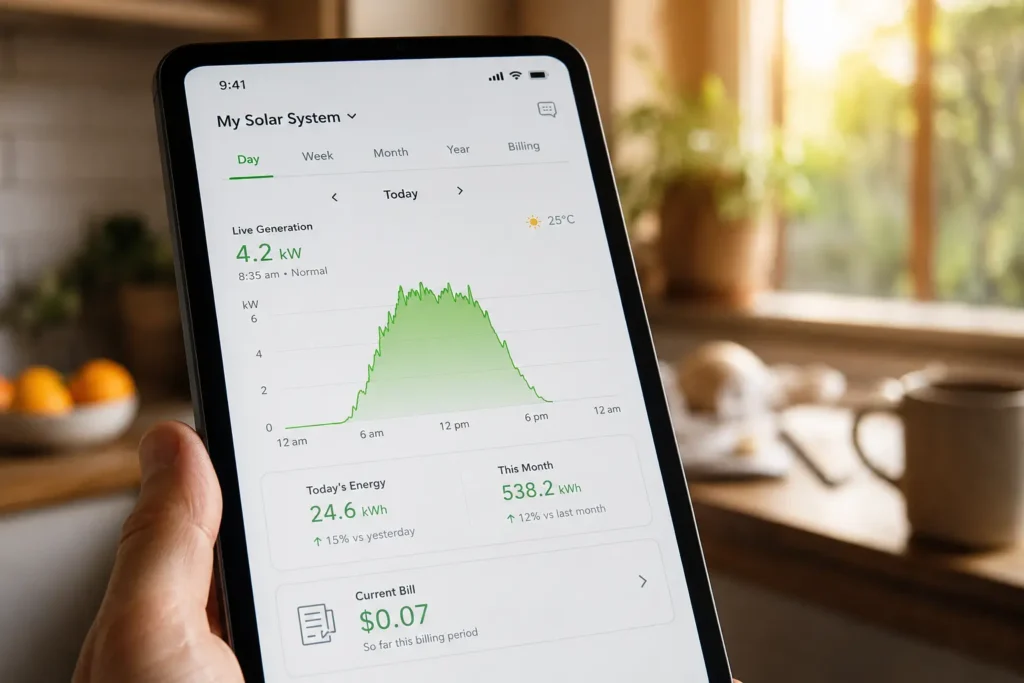
On average, homeowners see their electricity bills drop by $100 to $150 per month after going solar. Over the lifetime of a system, that adds up to somewhere between $31,000 and $150,000 in savings, depending on your location, energy use, and utility rates.
Residential electricity prices in the US have already risen 38% since 1990, and that trend isn’t going anywhere. Every year you run solar is a year you’re protected from those increases.
“I was skeptical about the savings claims, but our bill went from $220 a month to under $30. Three years in and I’m still a little shocked every time I open it.” — Homeowner, California
The savings figures vary significantly based on your system, location, and financing method — our solar energy cost guide gives you a precise breakdown of real 2026 prices and payback periods.
2. The Payback Period Is Shorter Than You’d Think
A common concern is that solar costs too much upfront to ever make financial sense. The numbers tell a different story — and they’ve surprised a lot of skeptics. The average US payback period is under 8 years, and in high-rate states like Illinois and California, it’s even shorter. After that point, the system keeps generating electricity for free for another 15–20+ years.
If you want the full state-by-state breakdown, real ROI numbers, and a worked example showing exactly how the maths plays out, we’ve put it all together in our complete guide to solar energy costs.
“Everyone told me it would take forever to break even. We hit our payback in just under six years. The system’s been running for nine now — the last three years have been pure savings.” — Homeowner, Illinois
3. The Federal Tax Credit Makes It Even More Affordable
The US federal Investment Tax Credit (ITC) has been one of the biggest drivers of solar adoption. Homeowners and businesses can claim 30% of their total solar installation cost back as a credit against their federal taxes. On a typical $24,000–$26,400 system (before incentives), that credit brings the net cost down to roughly $17,000–$18,500 for most homeowners.
Many states layer additional rebates and incentives on top of the federal credit, shortening the payback period further and improving the overall return on investment.
One thing worth keeping an eye on: solar panel pricing doesn’t exist in a vacuum. It’s been historically influenced by trade policy, import tariffs, and global manufacturing capacity. That said, US domestic module manufacturing grew by an extraordinary 190% in 2024 alone — which should help stabilise prices over time. It’s not a reason to delay, but it’s worth getting multiple quotes and understanding that the market can shift with policy changes.
A note on timing: The federal ITC has historically been tied to specific expiration windows, and the rules have changed over the years. Always verify current credit eligibility with a tax professional or check the latest IRS guidance before making installation decisions.
4. It’s a Genuinely Clean Energy Source
During operation, solar panels produce zero direct emissions — no carbon dioxide, no nitrogen oxides, no particulate matter. Compare that to coal-fired electricity, which carries a carbon footprint of around 820g of CO₂ per kilowatt-hour, and you start to see the scale of the difference.
Over its full lifecycle (including manufacturing), solar PV emits roughly 40–50g of CO₂ per kWh — still far below fossil fuels. And as the electricity grid that powers panel manufacturing gets cleaner over time, that lifecycle figure continues to fall. For anyone genuinely concerned about climate change, this is one of the most direct individual actions available.
But the environmental case for solar goes well beyond carbon numbers. During operation, panels produce no sulfur dioxide, no nitrogen oxides, or fine particulate matter — the pollutants most linked to smog and respiratory disease. They also consume virtually no water, unlike conventional power plants that require hundreds of gallons per megawatt-hour for cooling. An environmental specialist breaks down exactly why solar is good for the environment — covering air quality, water savings, and a full lifecycle comparison against fossil fuels.
5. It Increases Your Property Value
Solar panels don’t just save you money while you live in your home — they can make it worth more when you sell. Studies consistently show meaningful home value increases in areas with high electricity rates and strong solar markets, and buyers increasingly see solar as a feature worth paying for rather than a curiosity. We cover the exact figures and what drives them in our solar costs and ROI guide.
6. It Creates Real Energy Independence
One of the less-discussed advantages of solar energy is the autonomy it gives you. When you’re generating your own electricity, you’re no longer entirely at the mercy of your utility provider’s pricing decisions, grid outages, or supply chain disruptions. Pair a solar system with a battery storage system, and you can continue running essential appliances even during a blackout.
For businesses, energy independence also means more predictable operating costs — a real advantage when utility rates are volatile.
Here’s something that genuinely surprises a lot of new solar owners: most standard rooftop solar systems are still grid-tied, which means they automatically shut off during a blackout. It’s not a malfunction — it’s actually a safety feature designed to protect utility workers repairing lines. So if the grid goes down, your panels go down with it, unless you have a battery storage system. True energy independence means pairing solar with storage, and that’s a meaningful additional cost to factor in from the start.
“What surprised me was that during the blackout last summer, my solar system shut off too — I had no idea that was how it worked. We got a battery added after that. Now we’re actually independent.” — Homeowner, Texas
7. It Creates Jobs — A Lot of Them
The solar industry is one of the fastest-growing employment sectors in the United States. As of 2024, there were 280,119 solar energy jobs across all 50 states, according to the Interstate Renewable Energy Council’s National Solar Jobs Census. When combined with battery storage roles, the solar and storage sector employed 464,053 workers in 2024.
To put that in perspective: the solar industry employs more than three times as many workers as the coal industry. And solar installer jobs are projected to grow by 48% from 2023 to 2033, according to the US Bureau of Labor Statistics — making it one of the fastest-growing professions in the country.
This matters at a community level. Solar installation jobs are local by nature — you can’t outsource a rooftop installation to another country — and they pay well, typically requiring skilled trades but not necessarily a four-year degree.
8. The Cost of Solar Has Fallen Off a Cliff
In 2013, utility-scale solar electricity cost around 11 cents per kilowatt-hour — more expensive than coal at 9 cents. Today, according to Lazard’s 2024 Levelized Cost of Energy analysis, utility-scale solar in the US runs approximately 6.1 cents per kWh, compared to roughly 18.2 cents for new-build coal. Globally, IRENA’s 2024 data puts average solar costs at just 4.3 cents per kWh — a 90% reduction since 2010.
Solar is now the cheapest source of new electricity generation in most of the world. That’s not a projection — it’s the current reality.
9. It’s Low Maintenance
Once installed, solar panels require very little day-to-day attention. Most systems just need occasional cleaning (rain does much of the work) and a periodic inspection. There are no moving parts in a PV system, which means fewer things to break down. Most panels come with 25-year performance warranties, and many systems last well beyond that.
For homeowners and businesses who want an investment that doesn’t need constant babysitting, that’s genuinely appealing.
One nuance that tends to get buried in the fine print: solar panels do lose a small amount of efficiency each year, typically around 0.5–0.7% annually. It’s a slow, gradual decline — your system in year 25 will produce slightly less than it did on day one. Reputable manufacturers account for this in their 25-year performance warranties, but it’s worth factoring into your long-term savings projections rather than assuming consistent output across the full life of the system.
10. It Works at Scale — From a Single Home to an Entire Grid
One of solar’s underappreciated advantages is its scalability. A small rooftop system can power a single apartment. A community solar project can supply electricity to dozens of households who can’t install their own panels. A utility-scale solar farm can power tens of thousands of homes. The same fundamental technology works across all of these scales, which makes solar uniquely versatile.
In 2024, solar energy in the United States generated approximately 303 TWh of electricity — surpassing hydropower for the first time in US history.
The Disadvantages of Solar Energy
Now for the part that the sales brochures often skip. Solar isn’t perfect, and being honest about its limitations is important — both for making good decisions and for understanding where the technology still needs to improve.
1. The Upfront Cost Is Still a Barrier for Many People
A typical 7–8 kW residential solar system costs $21,000–$26,000 before incentives. Even after the federal tax credit brings that down to around $17,000–$18,500, that’s a significant sum of money. For households without the savings or credit access to finance that cost, solar simply isn’t accessible — regardless of how good the long-term economics are.
Financing options like solar loans, leases, and power purchase agreements (PPAs) can help spread the cost, but they also change the financial equation — often reducing long-term savings compared to an outright purchase.
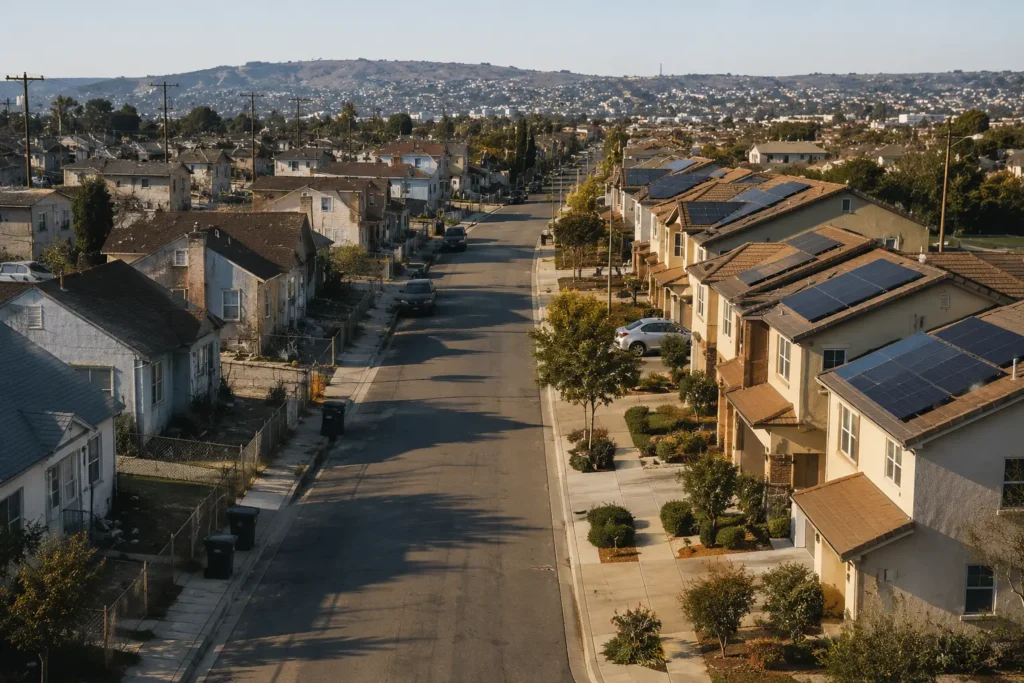
This is a genuine equity issue. The households that stand to benefit most from lower electricity bills — lower-income families spending a higher proportion of their income on energy — are often the least able to afford the upfront investment. Community solar programs are helping to address this, but access remains uneven.
There’s a dimension to this access problem that rarely gets discussed honestly. The people who would benefit most from cutting their electricity bills — renters, lower-income households, those living in apartments — are almost always the ones locked out of traditional rooftop solar. Community solar programs exist specifically to close that gap, allowing households to subscribe to a share of a local solar farm’s output without installing a single panel. Around 43 US states now have at least one community solar project online. If you rent or can’t install panels, this is worth looking into before writing solar off entirely.
“We’re renters, so installing panels was never an option. Signing up for our local community solar program cut our electricity costs by about 15% with zero upfront cost. More people need to know this exists.” — Renter, New York
2. Solar Doesn’t Work at Night (And Works Less Well on Cloudy Days)
This one sounds obvious, but it matters more than people often acknowledge. Photovoltaic panels need sunlight to generate electricity. They produce nothing at night and significantly less during overcast conditions, in winter, or in regions with less consistent sunshine.
Battery storage is the primary solution to this — pairing a solar system with a home battery means you can draw on stored daytime generation after the sun goes down or during a grid outage. It works well, but it adds considerable cost to the installation. Whether that cost makes sense is worth thinking through carefully before you commit.
For grid-scale solar, intermittency is one of the central engineering and policy challenges of the energy transition. Solar produces a lot of power at midday and very little in the morning, evening, and winter — which doesn’t always match when people actually need electricity. Managing that mismatch requires investment in storage, grid flexibility, and backup generation.
Something worth knowing that most guides skip over: households with solar tend to become genuinely more engaged with their energy use once the panels are up. When you have an app showing you real-time generation and consumption, you naturally start shifting habits — running the dishwasher at midday, scheduling laundry during peak sun hours, paying attention to what’s drawing power overnight. The financial return on solar isn’t just about what the panels produce. It’s also about the behaviour change that comes with it, and that compounds the savings over time.
“Once I started monitoring our app, I shifted our dishwasher and laundry to run during peak sun hours. Our export credits doubled. It changed how we think about energy use altogether.” — Homeowner, Arizona
3. It Requires a Suitable Location
Solar works best on south-facing roofs (in the Northern Hemisphere) that receive plenty of direct sunlight and aren’t shaded by trees or nearby buildings. A roof that faces east or west can still be cost-effective, but typically generates 10–20% less output. A heavily shaded roof may make solar impractical altogether.
Geography matters enormously too. A home in Arizona or Queensland will see dramatically better solar returns than one in the Scottish Highlands or the Pacific Northwest. The average payback period in Utah, for example, stretches to 19.6 years — far longer than the national average — largely due to lower electricity prices and less intense sunshine.
If your home isn’t a good solar candidate — old roof, wrong orientation, too much shade — the economics may simply not add up.
4. There Are Real Environmental Costs in Manufacturing
Solar panels are clean during operation, but making them is not without environmental impact. The manufacturing process requires energy (much of which currently comes from fossil fuels), and producing the silicon, glass, aluminum, and other materials in a panel generates emissions and consumes water.
Manufacturing solar panels also uses small quantities of materials like cadmium, lead, and certain rare earth elements — chemicals that require careful handling and responsible disposal. If a panel ends up in a landfill at the end of its life, those materials can potentially leach into soil and groundwater.
The lifecycle carbon footprint — roughly 40–50g CO₂ per kWh — is still dramatically lower than fossil fuels. But “clean energy” isn’t the same as “zero environmental impact energy,” and it’s worth being clear about that distinction.
5. Solar Panel Waste Is a Growing Problem
Here’s the part of the solar story that doesn’t get nearly enough airtime: what actually happens to panels when they wear out?
The honest answer is that most of them currently end up in landfill — and as the first wave of mass-installed panels starts reaching end of life, the scale of that problem is only going to grow. By 2050, IRENA estimates the industry will need to manage tens of millions of tonnes of solar panel waste globally.
Recycling is technically possible — glass, aluminium, silicon, and copper can all be recovered — but the infrastructure to do it affordably and at scale is still being built. It’s a known problem, and a solvable one, but it needs serious policy and industry attention before it becomes a crisis.
If you want to understand exactly what’s in a panel, how degradation works over time, and what the end-of-life picture looks like in practice, we’ve covered it in depth in our complete guide to how solar panels work.
6. Large-Scale Solar Requires a Lot of Land
Utility-scale solar farms are genuinely impressive, but they require significant land area — typically around 5–10 acres per megawatt of installed capacity. In some regions, this creates real tensions with agricultural land use, local ecosystems, and community preferences about how land should be used.
There are innovative approaches being developed — agrivoltaics (combining solar panels with farming), floating solar on reservoirs, and solar installations on brownfield sites — but land use remains a legitimate constraint on how fast utility-scale solar can expand in certain regions.
7. Grid Connection and Permitting Can Be Frustrating
If you’ve ever tried to go solar and gotten bogged down in the process, you’re not alone. Permitting and interconnection rules were the most commonly cited barrier by companies in the 2025 SolarReviews industry survey, with 33% of businesses flagging this as a key challenge.
The process of connecting a solar system to the electricity grid varies significantly by utility and state, and in many places it’s slow, expensive, and bureaucratic. This isn’t a problem with solar technology itself — it’s a regulatory and infrastructure challenge — but it’s a real friction point that adds cost and time to installations.
8. Not Every Roof Is Ready
A solar installation is only as good as the roof it’s mounted on. If your roof needs significant repairs or replacement within the next decade, it often makes sense to do that work before installing solar — otherwise you’ll need to uninstall and reinstall the panels when the time comes, adding thousands of dollars to the project. An older, damaged, or structurally inadequate roof can push out the payback period considerably.
What the Data Actually Tells Us
Stepping back from the individual pros and cons, what does the overall picture look like?
The numbers are genuinely striking. The US installed a record 50 GW of new solar capacity in 2024 — more than double what was installed just two years earlier. More than 80% of new electricity capacity added to the US grid in 2024 came from either solar or battery storage. Globally, solar PV is now the cheapest source of new electricity in most countries.
At the same time, the challenges are real: grid integration, manufacturing footprints, end-of-life panel waste, and access and affordability for lower-income households are all issues that require genuine policy and industry attention — not hand-waving.
The honest conclusion is this: for most homeowners and businesses with suitable properties, solar makes compelling financial and environmental sense today. The technology has matured, the costs have fallen, and the long-term economics are strong. But it isn’t right for everyone, and pretending otherwise does no one any favors.
Pros and Cons of Solar Energy: Quick Reference
Advantages of solar energy:
- Substantially reduces electricity bills over the long term
- Average payback period of 7.1 years in the US, shorter in high-rate states
- 30% federal tax credit (plus state incentives) reduces upfront cost
- Zero operational emissions
- Increases property value by 4–10%
- Provides energy independence and protection from rate increases
- Lifetime savings of tens of thousands of dollars — see the full breakdown
- Now the cheapest source of new electricity in most of the world
- Minimal maintenance requirements
- Scalable from individual homes to utility-scale
Disadvantages of solar energy:
- High upfront cost ($17,000–$18,500 net after federal credit for a typical system)
- Doesn’t generate electricity at night; reduced output on cloudy days
- Requires suitable roof or land conditions
- Manufacturing has environmental and carbon costs
- Panel waste disposal is an emerging challenge (78 million tonnes expected by 2050)
- Large-scale installations require significant land
- Permitting and grid interconnection can be slow and expensive
- Payback periods vary widely by location (from under 4 years to nearly 20)
Understanding the pros and cons of solar is only half the equation. The other half — the part that actually determines whether you should pick up the phone and call an installer — is figuring out whether the numbers work for your home, your electricity bill, and your timeline. Payback periods, ROI comparisons, and the five factors that genuinely drive the financial outcome are all covered in our in-depth guide: Is Solar Energy Worth It? A Realistic Guide for Homeowners
The Bottom Line
Solar energy is neither a silver bullet nor a scam. It’s a mature, cost-effective, and genuinely low-carbon technology that works extremely well in the right circumstances — and less well in others.
The advantages of solar energy are substantial and well-documented: lower bills, long-term financial returns, meaningful environmental benefits, and a growing industry that creates real jobs. The disadvantages are equally real: significant upfront costs, site-specific limitations, manufacturing footprints, and infrastructure challenges that require honest policy solutions.
If your home has a suitable roof, you live in a region with reasonable solar irradiance, and you plan to stay for more than 7–10 years, the economics of solar are compelling. If those conditions don’t apply, there may be better options — or community solar might be worth exploring.
Either way, understanding both sides of the equation is the starting point for making a smart decision.
Frequently Asked Questions
Solar energy can lower electricity bills, reduce carbon emissions, increase property value, and provide long-term energy savings.
The biggest drawbacks are the upfront installation cost, lower performance at night or during cloudy weather, and the need for a suitable roof or location.
In many cases, yes. Homes with solar systems are often more attractive to buyers because of lower energy costs.
Data sources: IRENA Renewable Capacity Statistics 2025; Lazard Levelized Cost of Energy 2024; EnergySage 2024 Marketplace Data; IREC National Solar Jobs Census 2024; Zillow Research; Ember / Energy Institute Statistical Review of World Energy 2025; US Energy Information Administration; Solar Energy Industries Association (SEIA).