
 Heating Solutions
 Solar Energy
Introduction: Unlocking the Sun’s Potential
Imagine a power source so vast, so inexhaustible, and so readily available that it could meet humanity’s energy needs for billions of years. This isn’t a sci-fi fantasy; it’s the reality of solar energy. For centuries, humans have been fascinated by the sun, worshipping it, farming by its rhythms, and marveling at its life-giving warmth. But in the last few decades, we’ve learned to harness its raw power to generate electricity, heat our homes, and even fuel our vehicles.
Solar energy, in its essence, is simply the radiant light and heat from the sun that is harnessed using a range of ever-evolving technologies. From the smallest calculators powered by a tiny solar cell to massive utility-scale solar farms stretching across acres, the applications of solar energy are diverse and growing at an exponential rate. In an era marked by increasing concerns about climate change, energy security, and the finite nature of fossil fuels, solar energy stands out as a beacon of hope – a clean, renewable, and increasingly affordable solution.
This comprehensive guide will delve deep into the world of solar energy, exploring its fundamental principles, the innovative technologies that capture its power, its numerous benefits, and the exciting future it promises. Whether you’re a homeowner curious about installing solar panels, a student researching renewable energy, or simply an individual interested in a greener future, this article will provide you with a thorough understanding of what solar energy is and why it’s becoming an indispensable part of our global energy landscape.
Chapter 1: The Sun – Our Ultimate Powerhouse
To understand solar energy, we must first appreciate its source: the sun. Our sun is an average-sized star, a gigantic ball of superheated plasma, primarily hydrogen and helium, located at the center of our solar system.
1.1 The Nuclear Furnace: How the Sun Produces Energy
The sun’s immense power originates from a process called nuclear fusion. Deep within its core, under incredible pressure and temperature, hydrogen atoms fuse to form helium atoms. This fusion reaction releases an enormous amount of energy in the form of electromagnetic radiation, which includes visible light, ultraviolet light, infrared radiation, X-rays, and radio waves.
This energy travels outwards from the sun’s core, through its various layers, and eventually radiates into space. By the time it reaches Earth, approximately 150 million kilometers away, this energy has traversed a vast cosmic distance, carrying with it the power to sustain life and, as we’ll see, to power our modern world.
1.2 Solar Radiation Reaching Earth
Only a tiny fraction of the sun’s total energy output reaches Earth, but even that fraction is monumental. The Earth intercepts roughly 173,000 terawatts (TW) of solar power. To put that into perspective, the global human energy consumption is currently around 18 TW. This means the sun delivers more than 9,600 times the energy humanity currently uses!
However, not all of this solar radiation reaches the Earth’s surface. A portion is absorbed, reflected, or scattered by the atmosphere, clouds, and atmospheric particles. The amount of solar radiation that actually reaches the Earth’s surface is known as “insolation” or “solar irradiance,” and it varies depending on geographical location, time of day, season, and weather conditions. Tropical regions generally receive more direct and consistent solar radiation than polar regions.
The spectrum of solar radiation that reaches the Earth’s surface is crucial for solar energy technologies. Photovoltaic (PV) cells, for instance, are designed to convert specific wavelengths of this radiation (primarily visible and near-infrared light) into electricity.
Chapter 2: The Core Technologies – How We Capture Sunlight
Harnessing solar energy involves a variety of technologies, each designed to capture sunlight and convert it into a usable form of energy. These technologies can broadly be categorized into two main types: photovoltaic (PV) systems and solar thermal systems.
2.1 Photovoltaic (PV) Systems: Turning Light into Electricity
Photovoltaic technology is perhaps the most well-known method of converting sunlight directly into electricity. The word “photovoltaic” comes from “photo,” meaning light, and “voltaic,” referring to electricity.
2.1.1 The Photovoltaic Effect: A Scientific Marvel
The magic happens at the atomic level, thanks to what’s known as the “photovoltaic effect.” This phenomenon was first observed by French physicist Edmond Becquerel in 1839. When certain materials are exposed to light, they generate an electric current.
The primary component of a PV system is the solar cell, typically made from semiconductor materials, most commonly silicon. Silicon atoms are arranged in a crystal lattice, and their electrons are tightly bound. To make a solar cell, silicon is “doped” with impurities to create two distinct layers:
-
N-type semiconductor: Doped with elements like phosphorus, which have an extra electron, creating a negative charge carrier.
-
P-type semiconductor: Doped with elements like boron, which have one less electron, creating “holes” that act as positive charge carriers.
When these two layers are placed together, an electric field forms at their junction. When sunlight (photons) strikes the solar cell, the photons transfer their energy to electrons in the silicon. If a photon has enough energy, it can knock an electron loose from its atomic bond. The electric field at the junction then pushes these free electrons to the N-type side and the “holes” to the P-type side. This separation of charges creates an electric potential, or voltage. If an external circuit is connected, these electrons flow through it to balance the charge, creating an electric current – voila, electricity!
2.1.2 Components of a PV System
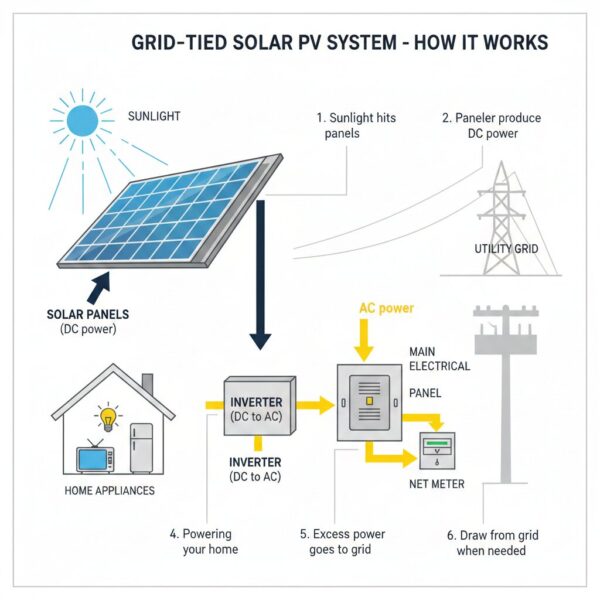
A typical grid-tied PV system for a home or business consists of several key components:
-
Solar Panels (Modules): These are assemblies of multiple individual solar cells connected together and encapsulated in a protective frame. Panels are designed to withstand outdoor conditions for decades.
-
Inverter: Solar panels produce direct current (DC) electricity. Most homes and the electrical grid use alternating current (AC) electricity. The inverter converts the DC electricity from the panels into usable AC electricity. There are string inverters, microinverters (one per panel), and power optimizers.
-
Mounting System: This physically secures the solar panels to a roof, ground, or other structure, often at an optimal angle for sunlight exposure.
-
Wiring and Electrical Components: Conductors, conduits, disconnects, and a main service panel integrate the solar system safely into the existing electrical infrastructure.
-
Net Metering (for grid-tied systems): A special meter that measures the electricity flowing both into and out of your home. When your solar panels produce more electricity than you use, the excess is sent back to the grid, and you receive credits. When you use more than your panels produce (e.g., at night), you draw electricity from the grid.
Here’s a simplified diagram of how a grid-tied solar PV system works:
2.1.3 Types of Solar Cells
The efficiency and cost of PV systems depend heavily on the type of solar cell used:
-
Monocrystalline Silicon: Made from a single, continuous crystal structure of silicon. These cells are highly efficient (typically 17-22%) and have a uniform dark appearance. They are often more expensive but offer higher power output per square foot.
-
Polycrystalline Silicon: Made from multiple silicon crystals fused together. They are slightly less efficient (15-18%) but generally more affordable to produce. They have a characteristic blue, speckled appearance.
-
Thin-Film Solar Cells: These are made by depositing one or more thin layers of photovoltaic material (such as amorphous silicon, cadmium telluride, or copper indium gallium selenide) onto a substrate like glass or plastic. They are less efficient (10-14%) but are flexible, lightweight, and can be integrated into building materials (BIPV). Their advantage lies in their lower manufacturing cost and ability to perform better in low-light conditions or high temperatures.
-
Perovskite Solar Cells: An emerging technology showing great promise. Perovskite materials are low-cost and can achieve very high efficiencies in laboratory settings, rivaling silicon. They are still in the research and development phase for commercial large-scale applications but hold potential for the next generation of solar.
2.2 Solar Thermal Systems: Harnessing Heat from the Sun
While PV systems convert light into electricity, solar thermal systems capture the sun’s heat directly. These systems are used for various applications, from heating water to generating electricity on a large scale.
2.2.1 Solar Water Heaters
The most common application of solar thermal technology is solar water heating. These systems use solar collectors to absorb sunlight and transfer its heat to water.
-
Flat-Plate Collectors: These consist of an insulated box with a dark absorber plate and a transparent cover. Water or a heat-transfer fluid circulates through tubes attached to the absorber plate, getting heated by the sun’s radiation.
-
Evacuated Tube Collectors: These are more advanced, consisting of parallel rows of transparent glass tubes. Each tube contains a metal absorber fin bonded to a heat pipe, all within a vacuum. The vacuum significantly reduces heat loss, making these collectors more efficient, especially in colder climates or when very high water temperatures are desired.
The heated water can then be stored in a tank for later use in homes, businesses, or even swimming pools. Solar water heaters can significantly reduce energy bills, especially in households with high hot water demand.
2.2.2 Concentrated Solar Power (CSP)
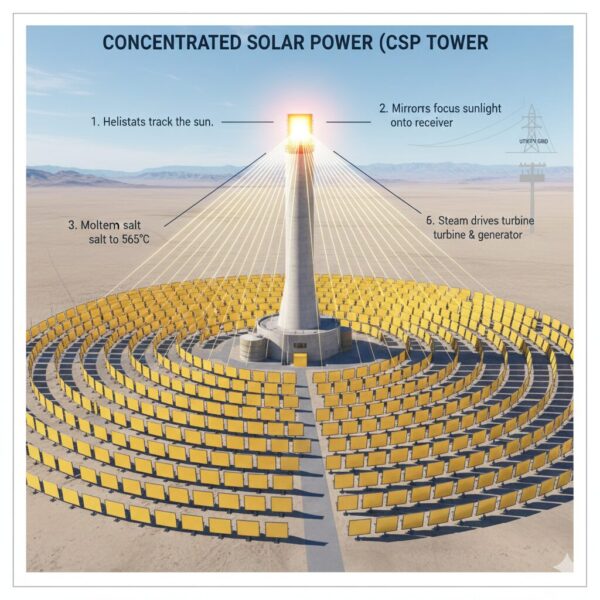
Concentrated Solar Power (CSP) systems are large-scale solar thermal power plants that generate electricity by focusing a large area of sunlight onto a small area using mirrors or lenses. This concentrated sunlight creates high temperatures, which are then used to heat a fluid (like oil or molten salt). The heated fluid then boils water to produce steam, which drives a turbine connected to a generator to produce electricity, much like a conventional power plant.
Key CSP technologies include:
-
Parabolic Trough Systems: Long, U-shaped mirrors focus sunlight onto a receiver tube running along the focal line.
-
Solar Power Towers: A field of flat, sun-tracking mirrors (heliostats) reflect sunlight onto a central receiver mounted atop a tall tower.
-
Dish Stirling Systems: Parabolic dishes focus sunlight onto a receiver at their focal point, powering a Stirling engine directly.
CSP plants often incorporate thermal energy storage (e.g., using molten salt) to store heat, allowing them to generate electricity even after the sun has set or during cloudy periods, making them a “dispatchable” renewable energy source.
Chapter 3: Why Go Solar? The Unbeatable Benefits
Now that we understand the science, we must ask: Why is the world rushing toward solar energy? It isn’t just about saving the polar bears (though that’s a big part of it). The shift to solar is driven by a powerful combination of environmental necessity and economic common sense.
3.1 The Environmental Imperative: Breathing Easier
The most immediate benefit of solar energy is its cleanliness. Unlike fossil fuels (coal, oil, and natural gas), generating electricity from solar panels produces zero direct greenhouse gas emissions.
-
Combating Climate Change: By replacing coal or gas-fired power plants, solar energy significantly reduces the amount of carbon dioxide ($CO_2$) released into the atmosphere. The National Renewable Energy Laboratory (NREL) estimates that widespread solar adoption could significantly reduce nitrogen oxides, sulfur dioxide, and particulate matter emissions—pollutants known to cause respiratory and cardiovascular issues.
-
Water Conservation: Traditional power plants are thirsty; they require massive amounts of water for cooling. Solar PV requires absolutely no water to generate electricity. In a world facing increasing water scarcity, this is a critical, often overlooked advantage.
3.2 The Economic Edge: Saving Money and Creating Jobs
The narrative that “solar is too expensive” is outdated. In the last decade, the cost of solar has plummeted by over 80%. In many parts of the world, solar is now the cheapest form of new electricity generation.
-
Energy Independence & Bill Reduction: For homeowners, the math is simple. Every kilowatt-hour (kWh) you generate on your roof is one less you have to buy from the utility company. Over the 25-30 year lifespan of a system, this translates to tens of thousands of dollars in savings.
-
Protection Against Volatility: Fossil fuel prices fluctuate wildly due to geopolitical tension and supply chain issues. Sunlight is free and immune to inflation. Installing solar effectively locks in your electricity price for decades.
-
Job Creation: The solar industry is a labor-intensive job engine. From R&D and manufacturing to installation and maintenance, the “green collar” workforce is growing faster than the overall economy in many nations.
| Feature | Fossil Fuels | Solar Energy |
| Fuel Cost | Volatile (High) | Free (Zero) |
| Emissions | High ($CO_2$, $NO_x$, etc.) | Zero (during operation) |
| Maintenance | High (complex machinery) | Low (solid state tech) |
| Dependence | Centralized Grid | Decentralized/Independent |
Chapter 4: The Real Talk – Challenges and Solutions
To write a truly credible pillar article, we must address the elephants in the room. Solar isn’t magic; it has limitations. However, technology is rapidly solving them.
4.1 Intermittency: The “Sun Doesn’t Shine at Night” Problem
The most obvious critique of solar is that it is an intermittent energy source. It doesn’t work at night, and production drops during cloudy weather.
-
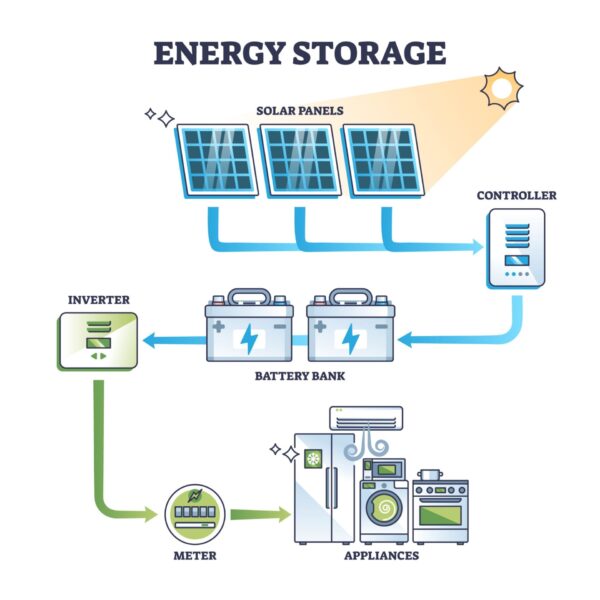
The Solution: Energy Storage. This is where batteries come in. Lithium-ion battery technology (similar to what is in your laptop or electric car) allows us to store excess energy generated during the sunny midday hours and discharge it in the evening.
-
The “Duck Curve”: Utilities often face a phenomenon called the “Duck Curve,” where solar floods the grid during the day (lowering demand for other power), but demand spikes at sunset just as solar goes offline. Batteries flatten this curve, making solar a 24/7 solution.
4.2 Land Use and Aesthetics
Utility-scale solar farms require space. Critics worry about land use competing with agriculture or spoiling natural landscapes.
-
The Solution: Agrivoltaics and Floating Solar.
-
Agrivoltaics is the dual use of land for both solar energy production and agriculture. Panels can actually provide shade for certain crops (like lettuce or tomatoes) and reduce water evaporation from the soil.
-
Floating Solar (Floatovoltaics) involves installing panels on reservoirs, lakes, or water treatment ponds. This saves land and the cooling effect of the water actually makes the panels more efficient.
-
4.3 Manufacturing and Recycling
While solar panels are clean while running, making them requires energy and mining raw materials (silver, silicon, lithium). Furthermore, we are facing a future wave of “solar waste” as old panels reach their end of life.
-
The Solution: The industry is moving toward a circular economy. New recycling methods can recover up to 95% of the materials in a solar panel (glass, aluminum, copper, and silver) to build new panels, reducing the need for mining.
Chapter 5: Is Solar Right for You? A Homeowner’s Guide
If you are reading this and wondering, “Should I put panels on my roof?“, here is a practical checklist to help you decide.
5.1 Assessing Your “Solar Potential”
Not every roof is a good candidate for solar. Consider these factors:
-
Orientation: In the Northern Hemisphere, south-facing roofs are ideal. West and East are okay, but North is usually inefficient.
-
Shading: Trees, chimneys, or neighboring tall buildings cast shadows that kill efficiency. Even shading a small part of a panel can reduce the output of the whole string.
-
Roof Condition: Solar panels last 25+ years. If your roof needs replacing in 5 years, do it before installing solar to avoid costly removal and re-installation fees.
5.2 Understanding the Incentives
Governments want you to go solar. Before signing a contract, research:
-
Federal Investment Tax Credits (ITC): In the US, for example, you can deduct a significant percentage (currently 30%) of the solar system cost from your federal taxes.
-
State and Local Rebates: Many local utilities offer cash rebates or performance-based incentives (SRECs) for every kWh you produce.
5.3 Buy vs. Lease
-
Buying (Cash or Loan): You own the system. You get the tax credits. You get the increase in home property value. Verdict: Best for long-term savings.
-
Leasing (PPA): A third party owns the system on your roof. You pay them for the electricity at a lower rate than the utility. You pay roughly $0 upfront, but you don’t get the tax benefits. Verdict: Good for immediate savings with no investment, but lower long-term ROI.
Chapter 6: The Future Horizon
Solar energy is still in its youth. What does the next 20 years look like?
-
Perovskites: As mentioned earlier, this new material could make panels distinctively cheaper and perhaps even transparent. Imagine windows in skyscrapers that generate power!
-
Solar Skins: Aesthetic improvements that allow panels to blend in with roof shingles or resemble custom patterns, eliminating the “blue rectangle” look.
-
Space-Based Solar: It sounds like science fiction, but agencies like ESA and NASA are researching launching solar arrays into orbit where the sun never sets, beaming the energy down to Earth via microwaves.
Conclusion: A Bright Future Ahead
Solar energy has graduated from a niche curiosity for environmentalists to a central pillar of the global energy economy. It is a technology that empowers individuals to become their own power plants, democratizes energy access, and offers the most viable path to halting climate change.
Whether you are looking to slash your electricity bills, reduce your carbon footprint, or simply invest in the future, the power of the sun is waiting. The transition to renewable energy is not just a possibility; it is an inevitability. The only question remains: When will you choose to plug into the sun?
Frequently Asked Questions
Yes, they do—but with reduced output. Solar panels do not need direct, blazing sunlight to generate electricity; they just need daylight. On a cloudy day, panels might produce 10% to 25% of their typical output. As for winter, the cold temperature actually helps! Solar electronics function more efficiently in cooler weather. The only downside to winter is fewer daylight hours, but the system still generates power.
This is a very common concern. You generally have two options:
-
Sell the home with the system: This is usually the best financial move. Studies show that homes with solar panels sell faster and for a premium price because the new owners will enjoy the low utility bills immediately.
-
Move the system: While possible, uninstalling and reinstalling a system is labor-intensive and expensive, and it may void your warranty. It is rarely recommended.
Note: If you lease your panels rather than own them, you will need to transfer the lease agreement to the new home buyer.
Solar panels are incredibly durable. The industry standard for a warranty is 25 to 30 years. However, this doesn’t mean they stop working after 30 years. It simply means their efficiency drops slightly. Solar panels degrade at a rate of about 0.5% per year. This means that after 25 years, your panels will likely still be producing about 87-90% of the electricity they did on day one.
In most climates, no. Solar panels are generally self-cleaning; standard rainfall is usually sufficient to wash away dust and dirt. However, if you live in an exceptionally dry area or near heavy agriculture (lots of dust) or the coast (salt spray), a professional cleaning once a year can help maintain maximum efficiency.
Important: Never use harsh chemicals or abrasive sponges on your panels, as scratching the glass will permanently lower their output.
When installed correctly by a certified professional, no. In fact, solar panels can actually extend the life of the portion of the roof they cover by protecting shingles from UV rays and weather damage. The racking systems used today are designed to be watertight, using flashing and sealants to prevent any leaks where the equipment attaches to the roof rafters.
Yes, but it is expensive. To go truly off-grid (disconnecting from the utility entirely), you need a very large solar array and a massive battery bank to sustain you through weeks of bad weather or winter darkness. For 99% of homeowners, a grid-tied system (where you are still connected to the utility for backup) is the most cost-effective and reliable solution.
This is an important environmental question. As the first generation of solar panels reaches the end of their life, a recycling industry is emerging to handle them. Up to 90% of the materials in a solar panel (glass, aluminum frames, copper wiring, and silicon) can be recycled.
Governments and industry leaders are currently building the infrastructure to ensure older panels don’t end up in landfills.